India 2026: The Generational "Sweet Spot" for NRI Real Estate Success

The narrative of the Non-Resident Indian (NRI) and their relationship with Indian real estate has undergone a profound metamorphosis. For decades, buying a house in India was a "sentimental backup plan"—a plot of land in a hometown or a flat in a quiet suburb intended for an eventual retirement that might or might not happen.
However, as we move through 2026, the landscape has shifted from the emotional to the purely analytical. Today, an NRI investing in Indian property isn’t just buying "a home back home"; they are acquiring a high-yield, strategic asset in the world’s fastest-growing major economy.
Here is a comprehensive look at why 2026 represents a generational "Sweet Spot" for NRI investors, spanning currency dynamics, regulatory breakthroughs, and the shifting urban geography of India.
1. The Currency Arbitrage: The "Rupee at 90" Advantage
The most immediate and visceral reason for NRI interest in 2026 is the valuation of the Indian Rupee. With the exchange rate hovering around ₹90 per USD (and similar relative strengths for the GBP and Euro), the purchasing power of the diaspora has reached a historic peak.
For an NRI, this is essentially an "instant discount." Consider the math: A premium 3BHK apartment in a high-growth corridor like North Bangalore that cost ₹2.5 Crores three years ago might still be priced similarly in real terms, but the dollar outlay required to purchase it has dropped significantly.
This $48,000 difference—nearly 18% in "savings"—allows NRIs to either pocket the surplus or move up the value chain, opting for "Branded Residences" or luxury penthouses that were previously out of reach. In a world where Western real estate markets are grappling with stagnation and high interest rates, this currency advantage acts as a powerful magnet, pulling capital back to the subcontinent.
2. The Regulatory Revolution: Budget 2026 and "Frictionless" Investing
Historically, the biggest barrier for NRIs wasn't the price; it was the compliance migraine. Dealing with Indian bureaucracy from thousands of miles away was a deterrent. However, the Union Budget 2026 has systematically dismantled these hurdles.
A. The Death of the TAN Requirement
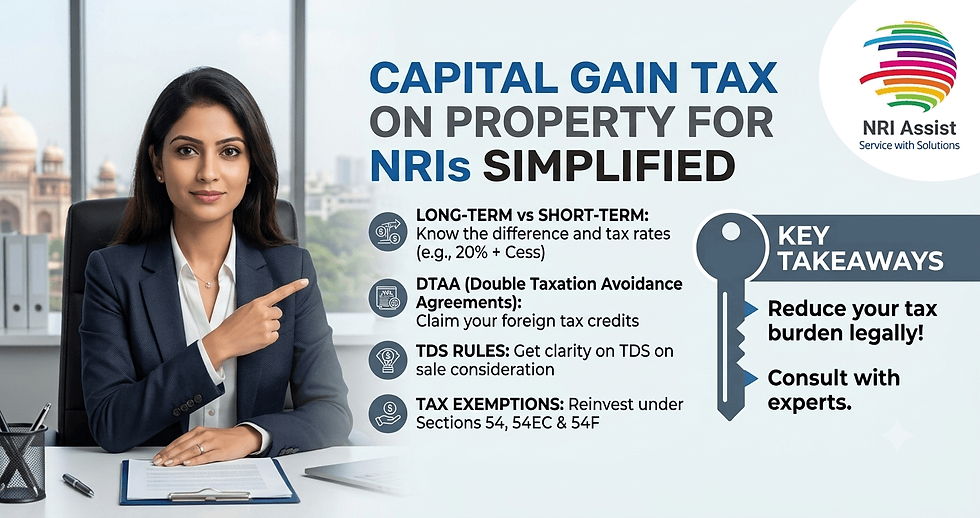
One of the most significant reforms in recent years is the simplification of TDS (Tax Deducted at Source) on property sales. Previously, if an NRI sold a property, the resident buyer had to obtain a TAN (Tax Deduction and Collection Account Number). This led to massive delays and forced NRIs to hire expensive consultants just to navigate a single sale.
The new PAN-based TDS system allows buyers to deposit tax using only their Permanent Account Number, putting NRI transactions on par with domestic ones. This "frictionless" exit strategy has made the asset class far more liquid and attractive.
B. RERA 2.0 and Digital Land Records
The maturity of the Real Estate (Regulation and Development) Act (RERA) in 2026 has brought a level of transparency that was unthinkable a decade ago. With the "National Integrated Land Records Management System," an NRI in San Francisco can verify the title of a plot in Hyderabad or a flat in Noida with a few clicks. The era of "land grabbing" and project delays is being replaced by a tech-driven, accountable ecosystem.
3. The Yield Shift: Comparing Indian Hubs vs. Global Cities
The "Buy-to-Let" model in India has finally become competitive on a global scale. While residential rental yields in "Safe Haven" cities like London, New York, or Singapore have been compressed to a measly 2–2.5%, Indian tech corridors are seeing a surge.
Why are yields rising?
Global Capability Centers (GCCs): Over 2,000 global firms have set up their high-end tech and R&D centers in India by 2026. This has created a massive demand for "Executive Housing"—premium, managed apartments for high-earning professionals who prefer renting over buying.
Co-Living and Student Housing: NRIs are increasingly diversifying into "alternative" real estate. Investing in managed student housing near educational hubs or co-living spaces for Gen Z workers offers yields as high as 7–9%, far outperforming traditional residential rentals.
4. The Rise of "Tier-2" and Infrastructure Catalysts
While Mumbai and Delhi remain the "blue-chip" investments, 2026 is the year of the Tier-2 breakout. Driven by the "National Infrastructure Pipeline," cities like Ahmedabad, Lucknow, Indore, and Kochi are seeing unprecedented capital appreciation.
The completion of major infrastructure projects has redefined property values:
Mumbai 3.0: The operationalization of the MTHL (Atal Setu) and the Navi Mumbai International Airport has turned the Navi Mumbai-Panvel belt into a goldmine.
The NCR Expansion: The Noida International Airport (Jewar) has transformed the Yamuna Expressway from a barren stretch into a commercial and residential hub, with prices appreciating by nearly 40% in the lead-up to 2026.
For an NRI, these infrastructure-linked investments offer a "high-beta" opportunity—higher risk than a finished apartment in South Mumbai, but with the potential for massive wealth multiplication.
5. Commercial Real Estate and REITs: The New Frontier
Not every NRI wants to deal with the "three Ts" of residential landlording: Tenants, Toilets, and Taxes. This has led to the explosion of Fractional Ownership and REITs (Real Estate Investment Trusts) in 2026.
Investment Type | Effort Level | Minimum Ticket Size | Expected Return (Total) |
Physical Residential | High | ₹75 Lakhs+ | 12-15% (Yield + Growth) |
Fractional Commercial | Low | ₹25 Lakhs | 14-17% (Rent + Growth) |
REITs | Zero | ₹500 | 8-11% (Dividends + NAV) |
NRIs are now using digital platforms to own "fractions" of Grade-A office spaces in BKC (Mumbai) or Cyber City (Gurgaon). These assets are occupied by Fortune 500 companies, ensuring that the rent hits the NRI’s NRO account on the 1st of every month without a single phone call to a plumber.
6. The Psychological Pivot: The "Landing Pad" Concept
Finally, we must address the "Reverse Brain Drain." Post-2024, the global job market for tech and finance has seen significant volatility. Many NRIs are now purchasing property in India as a "Landing Pad."
This is no longer about retiring at 65. It’s about a 35-year-old software engineer in Seattle buying a luxury flat in a "Gated Community" in Bangalore, knowing that if they choose to move back to lead an Indian startup, they have a world-class home ready for them. These gated communities offer amenities—EV charging, co-working pods, infinity pools, and 5-tier security—that often exceed what is available at similar price points in the West.
7. Strategic Considerations: How to Invest Wisely in 2026
While the outlook is overwhelmingly positive, investing from abroad requires a tactical approach:
Digital Power of Attorney (PoA): Use the new digitized PoA norms to appoint a trusted representative or a wealth management firm in India.
Reputation over Price: In 2026, the market has bifurcated. "Tier-1" developers (Godrej, Tata, DLF, Lodha) command a premium because they deliver on time. Avoid the temptation of "deep discounts" from unlisted, smaller players.
The Sustainability Premium: Properties with IGBC (Indian Green Building Council) certification are seeing higher resale values and faster rental pickups. The modern Indian tenant is eco-conscious.
Conclusion: The Convergence of Wealth and Heritage
In 2026, the stars have aligned for the Indian diaspora. The combination of a strong foreign currency, a reformed regulatory environment, and explosive urban growth has turned Indian real estate into a "must-have" in any global portfolio.
Investing in India today is no longer just a way to stay connected to one's roots; it is a sophisticated play on the "Indian Decade." Whether it is a high-yield commercial office, a luxury "landing pad," or a plot in a booming Tier-2 city, the Indian soil is currently offering some of the best returns on the planet.
At NRI Assist Services, we help NRIs across the Globe to sell their properties. You can WhatsApp us: https://wa.me/message/2KGAATYMDLUPN1 or reach out at +91 9810915147.
Explore their offerings at https://nriassist.in . Cheers!


Comments